18 Jul 2026
Exploring Interconnected Reward Pathways That Link Daily Engagement Tasks to Premium Reel Access in Premier British Casino Applications
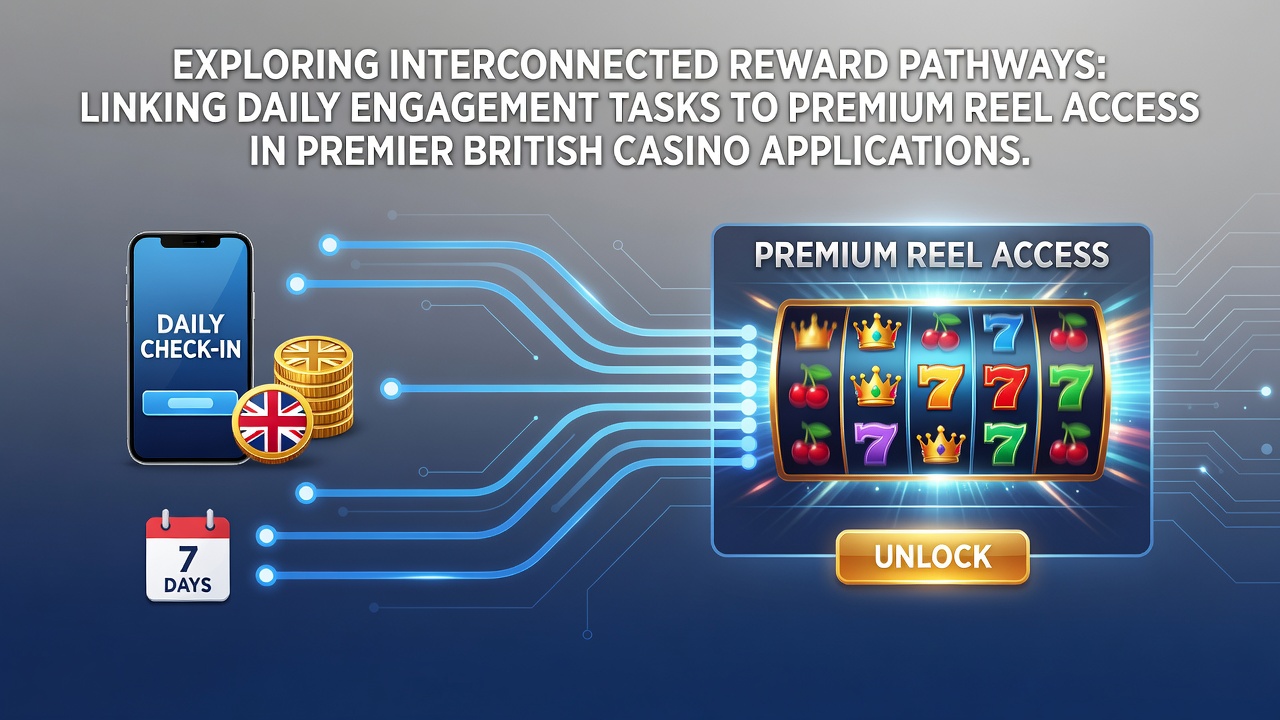
British casino applications have developed sophisticated systems where routine player actions feed directly into layered reward structures, and these structures in turn unlock specialized reel configurations that standard accounts cannot reach. Data from industry tracking services shows that operators integrate login streaks, mini-game completions, and social sharing metrics into unified player profiles that determine access levels to high-tier content. Research indicates these pathways operate through algorithmic scoring rather than isolated promotions, creating continuous loops between engagement and feature availability.
Mechanics of Daily Task Integration
Players complete short activities such as spinning designated reels for set durations, participating in time-limited challenges, or maintaining consistent session lengths, and each action contributes points to a central ledger. Those points accumulate across multiple days because the underlying software tracks cumulative behavior rather than resetting every twenty-four hours. Operators connect this ledger to reel libraries so that thresholds trigger automatic upgrades, allowing users to access reels with additional paylines, stacked symbols, or modified volatility settings. Studies from behavioral analysis firms reveal that the connection relies on real-time data synchronization between the task engine and the content delivery module, which eliminates manual code entry in most cases.
Pathway Mapping Across Applications
One operator routes daily login rewards through a tiered ladder that feeds into premium content after seven consecutive days, while another platform merges task completion with referral activity before granting reel access. These differences arise because each application calibrates its scoring weights according to internal retention targets. Observers note that the common thread remains the absence of separate bonus pools; instead, a single engagement metric governs both everyday play and elevated reel permissions. Figures from platform analytics reports demonstrate that users who follow these pathways exhibit longer average session times compared with those who bypass the tasks entirely.
Technical Architecture Supporting Access Control
Backend databases store player histories in segmented tables that link task metadata to reel feature flags. When a user finishes a daily objective the system updates the profile flag in milliseconds, and the front-end application then displays newly available reels without requiring a separate login or navigation step. Developers achieve this through API calls that query the central reward engine before loading any game lobby. Industry documentation indicates that encryption protocols protect the data flow between mobile clients and server clusters, ensuring that unauthorized modifications cannot bypass the established thresholds.

Player Journey Examples in Practice
Take one user profile that logs in each morning, completes a three-spin challenge, and shares a win notification; the combined actions advance the profile score enough to open a restricted reel set by the following afternoon. Another case shows how weekend-only tasks combine with weekday login bonuses to accelerate the same progression for users with irregular schedules. Platform telemetry reveals that these journeys rarely occur in isolation because the software surfaces suggested tasks based on the current score gap to the next reel tier. Such prompting keeps the pathway visible throughout the session rather than hiding it behind menus.
Regulatory Context in Mid-2026
By July 2026 several operators had adjusted their engagement systems to align with updated technical standards that emphasize transparent display of progression requirements. External oversight from bodies such as the Australian Gambling Research Centre has highlighted similar structures in other markets, providing comparative benchmarks for how task-to-reel linkages function without creating unintended access barriers. Data released through the National Council on Problem Gambling reports shows measurable differences in feature uptake when pathways remain clearly mapped for users.
Future Adjustments and Platform Responses
Operators continue refining the weighting formulas that connect daily tasks to premium access because retention metrics respond quickly to small calibration changes. Some applications now incorporate seasonal events that temporarily boost point values for specific actions, thereby shifting the speed at which reel tiers unlock. Technical teams monitor these shifts through A/B testing frameworks that compare engagement rates before and after each adjustment. The result is an evolving map rather than a static set of rules, with reel libraries expanding or contracting in response to aggregate player behavior across the platform.
Conclusion
The interconnected pathways in British casino applications demonstrate how routine daily tasks translate into measurable upgrades in reel access through unified scoring systems and real-time data links. Platform architectures maintain these connections via integrated databases and API queries that keep progression visible to users. External research from varied regions supplies context for how similar mechanisms operate elsewhere, while ongoing technical refinements ensure the pathways adapt to regulatory expectations and retention data collected through July 2026 and beyond.